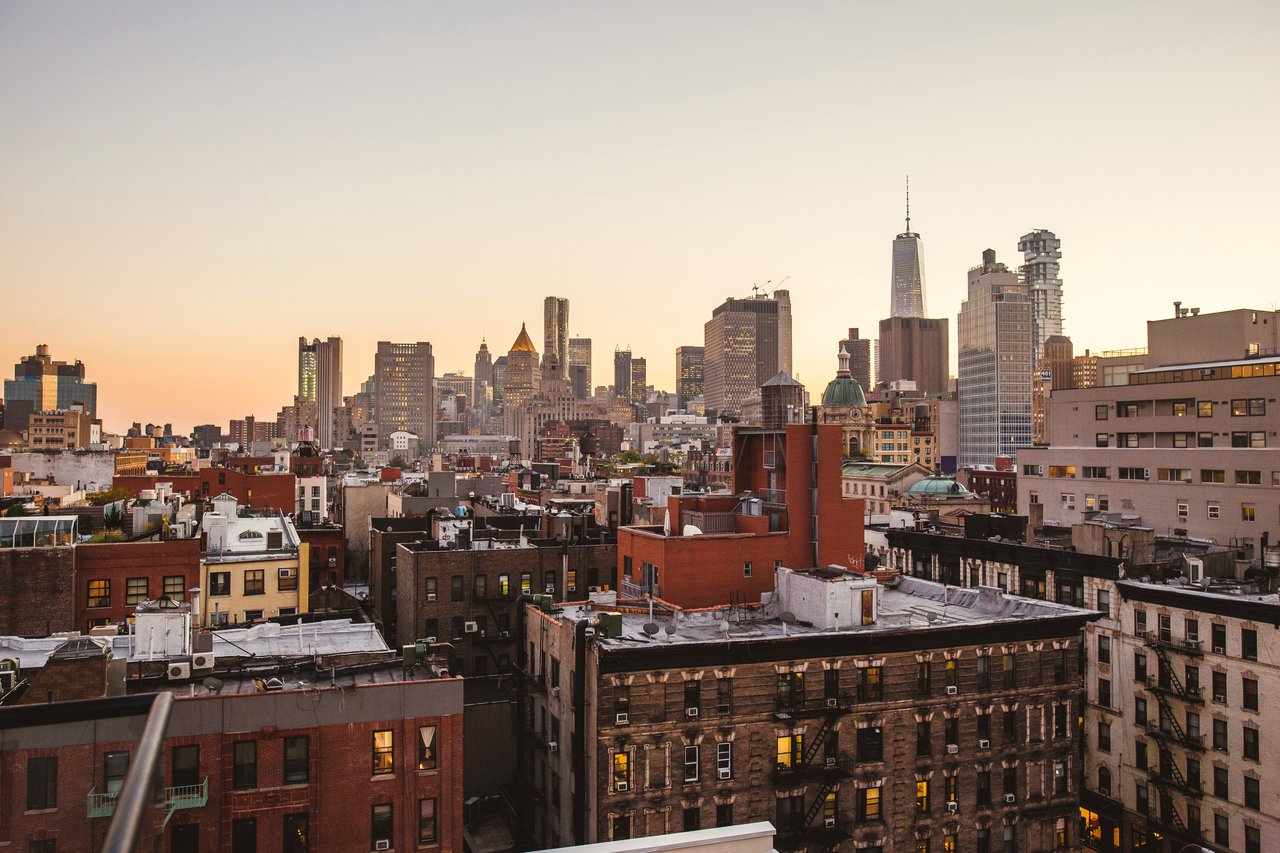
Walk the block between Ninth and Tenth Avenues on West 21st Street and you have probably done what most Chelsea residents do: glanced through the iron fence at the Gothic spires inside, wondered what it actually was, and kept walking. The General Theological Seminary has occupied that full block since the 1820s, and for nearly two centuries it operated the way seminaries do: quietly, privately, and almost entirely closed to anyone who wasn't training for ordination.
This semester, for the first time in the property's history, the gate has a rotating cast of undergraduates walking through it who have nothing to do with the clergy. The change follows the seminary's long-term lease with Vanderbilt, an arrangement with practical implications for Chelsea residents.
What was actually behind the fence
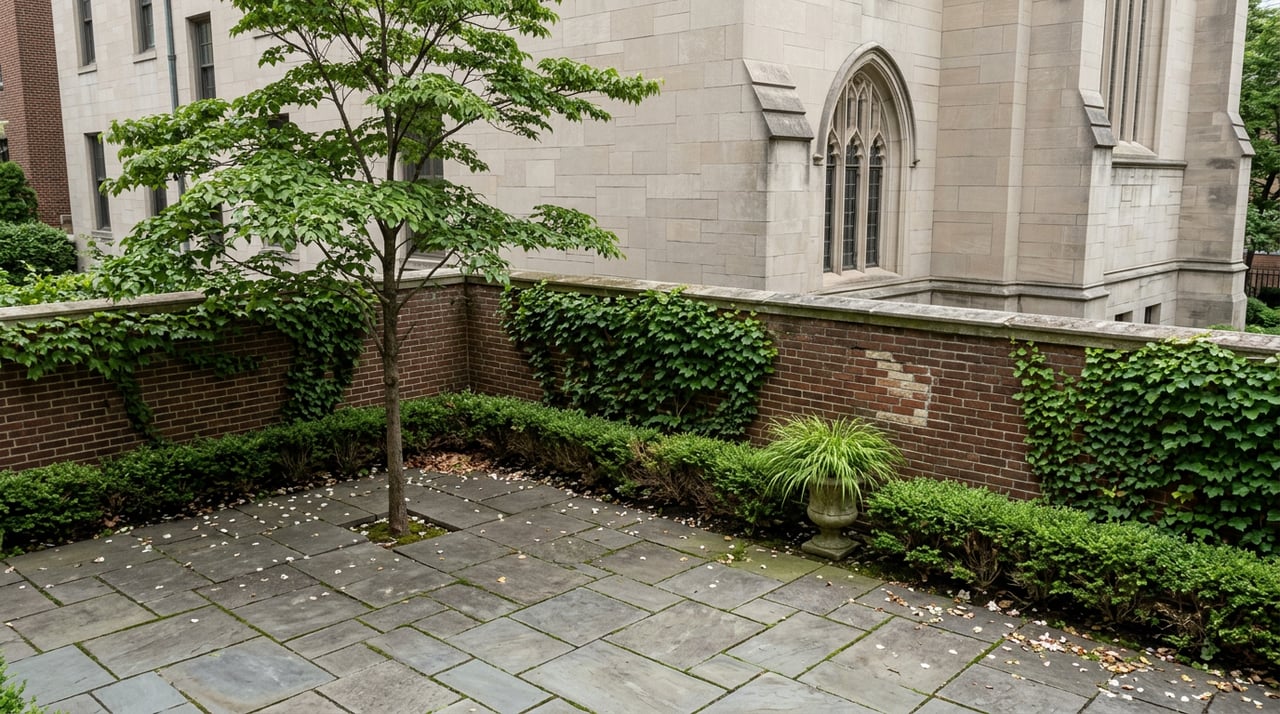
The seminary, founded in 1817, is the oldest of its kind in the Episcopal Church. Its campus, known as the Close, sits inside the Chelsea Historic District and centers on the Chapel of the Good Shepherd, completed in 1888 and long nicknamed the Jewel of Chelsea Square. Architect Charles Coolidge Haight modeled its tower on Magdalen College at Oxford and worked the brick coloring in a pattern borrowed from William Butterfield's Keble College. It is, by any measure, one of the more architecturally serious blocks in Manhattan, and one of the least visited by the people who live around it.
The campus has remained largely private, even as the seminary's relationship with the property has changed.
The seminary's finances and the Vanderbilt lease
Chelsea residents who have lived here long enough already watched this play out once. In 2007, the seminary sold Sherrill Hall, a building on Ninth Avenue, to the Brodsky Organization, which built the Chelsea Enclave condominium on the site, completed in 2010. The building that is now the High Line Hotel started as a seminary dormitory before it, too, left the seminary's hands. Over close to two decades, parts of the block have changed hands or uses.
The Vanderbilt deal is simply the largest piece yet. In 2024, the seminary signed a 99-year ground lease handing Vanderbilt University operating control of twelve historic buildings across 2.7 acres, nearly a full city block, in exchange for long-term revenue. The Very Reverend Ian S. Markham, the seminary's president, described the search in Village View as one for "a mission-compatible tenant," one that let the institution keep operating out of its historic home while someone else funded the upkeep. Vanderbilt got its first campus outside Nashville in the university's 150-year history. Vanderbilt became the seminary's long-term tenant.
What arrived this semester, and what didn't
The inaugural cohort landed this fall: roughly 100 undergraduates, mostly juniors and seniors visiting from Vanderbilt's Nashville campus for a single semester, alongside the first class in a new Master of Science in Business and Technology program run jointly by Vanderbilt's Owen Graduate School of Management and School of Engineering. Every undergraduate in the program is also required to hold an internship, and the host list Vanderbilt shared with Chelsea Community News reads like a cross-section of Manhattan employers, including Alvarez & Marsal, the American Museum of Natural History, Atria Health, and Avenues New York.
It is worth being precise about what this population actually is, because it is not a permanent dorm expansion. The fall semester ends December 10, with exams running December 11 through 19. A new group arrives in time for the spring semester, which begins January 11, 2027. What Chelsea residents will notice this fall is a seasonal cohort on a fixed academic calendar, not a standing increase in the block's year-round population.
The track record before the students ever arrived
Vanderbilt tested public appetite for this years before a single student moved in, and the record is worth knowing even though it is history now, not this season's calendar. A three-part lecture series called Vanderbilt in the City launched in spring 2024, before the lease had even closed, and drew standing-room crowds totaling over 600 attendees. By fall 2025, the university had expanded that into a full faculty lecture series at the Refectory, entrance at 440 West 21st Street, including a night called Divine Rhythms: Jazz and the Sacred and a talk on AI and the Future of the American University, both open to the public with registration.
Neither of those specific nights is on this year's calendar. But the pattern they set, free public evenings inside a 138-year-old chapel building most residents have only seen through a fence, is the reason it is worth watching Vanderbilt's site for whatever comes next rather than assuming the gate stays shut between move-in and finals.
What the restoration has and hasn't settled
None of this happened quietly. Chelsea Community News reported in late August that construction and repair work on the block's exteriors and infrastructure had been running for months, with the paint on some surfaces still not dry when students arrived. James Kellerhouse, Vanderbilt's assistant vice chancellor for strategic initiatives in New York, told the outlet that work so far had focused on "interior renovations, façade restoration, restoration of the campus's historic bluestone pathways and landscaping, accessibility improvements, lighting improvements, and other upgrades," all of it reviewed and approved by the New York City Landmarks Preservation Commission given the block's historic district status. Kellerhouse told Chelsea Community News that Vanderbilt is still in early stages of deciding what further restoration will look like "over the coming years."
The rollout has not been friction-free. Earlier in the year, on-site protests over the use of non-union labor put the project in what Kellerhouse told Chelsea Community News was "fence-mending mode" with local labor partners, a detail worth knowing if you have watched the scaffolding and wondered why the work seemed contentious at times. The seminary itself has not gone anywhere either. GTS continues to operate on the Close as a separate entity, running its hybrid Master of Divinity program alongside Vanderbilt's new tenancy, exactly as Markham described when he negotiated the lease.
What actually changes on your walk this fall
If you live near Ninth and Tenth Avenues in the Twenties, here is what to expect: you will see more foot traffic on weekday academic hours as roughly 100 students move between classes, the Refectory, and internships across the city. You will not see the Close become a public garden. Outside of whatever public evening Vanderbilt schedules next, access remains what it has effectively been for two centuries, controlled by whoever holds the lease, which is now Vanderbilt rather than the seminary alone.
What changed is more specific than "a university moved in." The result is a more active campus, but not an open one.
If you're weighing what a block like this means for property values, timing, or how new institutional neighbors tend to shape a co-op or condo's long-term position, that's a conversation worth having with someone who tracks this market closely. Frances Katzen and the Katzen Team work Chelsea's buildings and blocks in detail, well beyond what shows up in a listing description. Get in touch when you're ready to talk specifics.