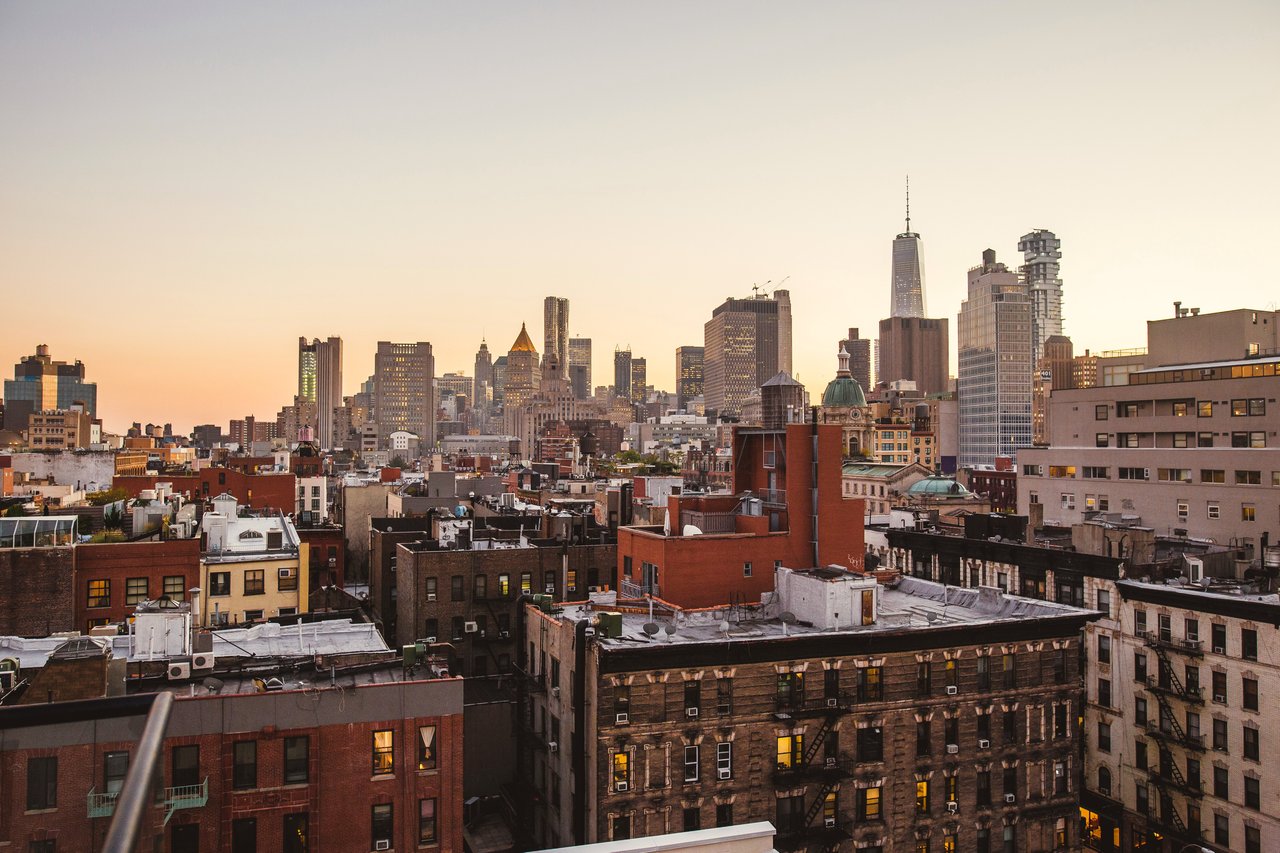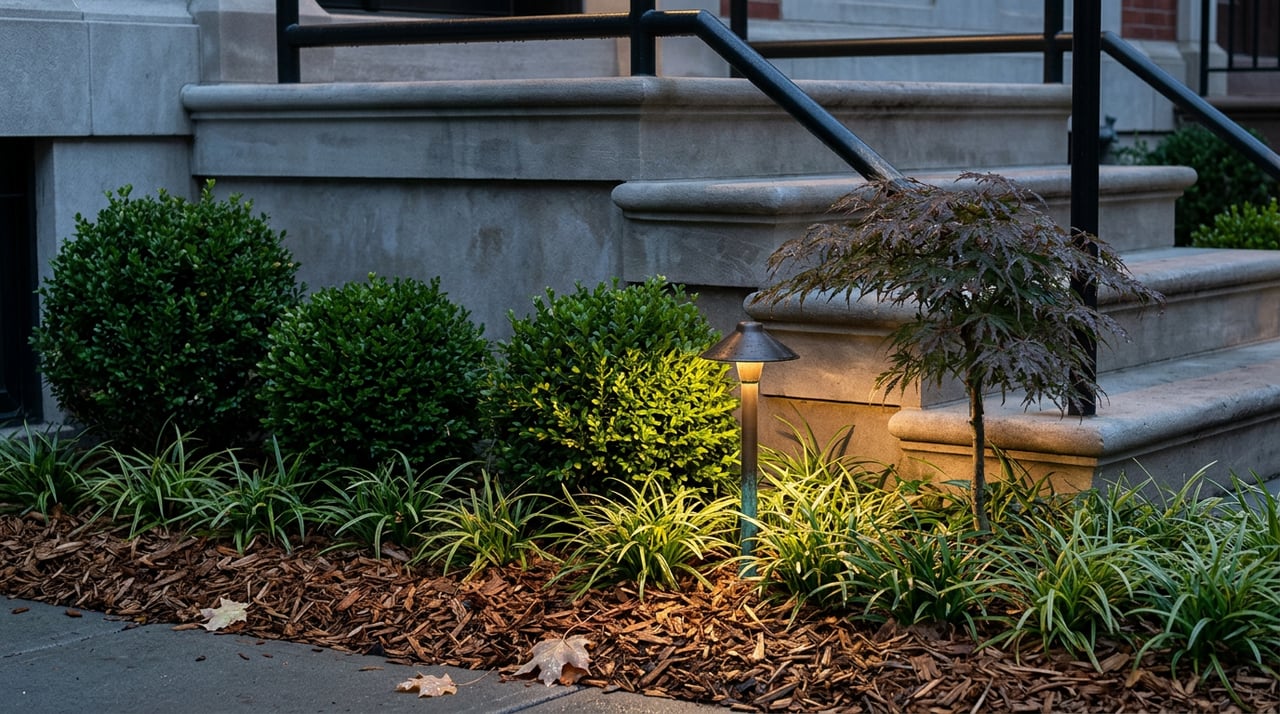
At the corner of Tenth Avenue and 24th Street, a strip of concrete no wider than a doorway glows faintly after dark. It sits inside a traffic median, the kind of leftover urban space usually reserved for a stop sign and cigarette butts. Instead, it holds a dense, deliberate planting that someone designed to catch light at night. Neighbors call it Itty Island, as described in a recent Chelsea News NY profile.
It has no city budget, no maintenance contract, and no sign explaining what it is. It exists because two residents began tending the patch, and because enough people around them agreed to help keep it alive.
That distinction matters more than it sounds. Chelsea has plenty of manicured, professionally run green space within a five-minute walk of this median: Bella Abzug Park, Hudson River Park, the High Line. Itty Island is not that. It is proof that the neighborhood's greenery runs on two entirely different operating systems, and most residents only ever notice one of them.
A Patch of Dirt Nobody Was Assigned
Alex Chapman and Pete Fehn live near the corner of 24th and Tenth. According to a recent profile in Chelsea News NY, the two noticed a neglected patch of dirt inside the median and decided to do something about it. Chapman brought a design background from years in fashion and private garden work. Fehn works in marketing analytics and took on getting the word out. Between them, they turned an ignored strip of pavement into what the paper describes as an "iridescent quadrangle" that glows at night, the result of a lighting plan a neighbor helped design.
They started three months before the story ran, expecting the usual hazards of gardening in public space in Manhattan: litter, vandalism, indifference. Instead they found rich, largely debris-free soil and a corner of the neighborhood that wanted to help.
That help arrived in specific, unglamorous forms. There is no water spigot at a traffic median, so Luli, the superintendent of the adjacent building, who was already watering his building's tree pits, took over watering Itty Island too. Chapman describes him as having become the garden's head waterer, consultant, and de facto security. As he put it in the Chelsea News NY profile, every public-facing space needs a Luli.
A few floors up, a neighbor named Pat watches the median from her window. She introduced herself the day Chapman and Fehn started turning soil, and later brought back lupine from a trip to the Midwest to add to the planting. She now sends updates on the garden's condition from above, an informal lookout for a garden with no lock and no gate.
The garden has also picked up a small following on Instagram, including, notably, New York State Senator Erik Bottcher.
Two Green Spaces, Two Different Rulebooks
None of this happened through a permit process. A traffic median is Department of Transportation right of way, not parkland, which means there is no formal channel for a resident who wants to plant one. Itty Island exists because two people decided to plant the median, and because the informal social fabric of one block, a super, a window-watcher, a curious neighbor, was enough to sustain it.
Compare that to Bella Abzug Park, about ten blocks north in Hudson Yards, just past Chelsea's edge. The Hudson Yards Hell's Kitchen Alliance runs a full slate of programming there each year: yoga and mat pilates several days a week through Bien Good Well, Vinyl Nights dance parties, acoustic concerts for kids from Mike Messer Music, and free bootcamp classes with Speakeasy of Strength, all coordinated through HYHK's own event calendar and social channels. It is real programming with real staff behind it, and it runs, by HYHK's own description, from spring through early fall.
Itty Island runs on a different clock entirely. It has no season. It does not pause when the HYHK calendar goes quiet in November. It depends on whether Luli is still watering, whether Pat is still watching from her window, whether the two residents who started it are still walking past it every day.
This is the part of Chelsea's public realm that never makes it into a parks department press release: the neighborhood is dotted with small, self-appointed acts of stewardship that fill in the space between official programming. Down to Earth Farmers Market, running Saturdays from 9am to 2pm on West 23rd Street off Ninth Avenue, has held a presence in Chelsea for over a decade, an institution with its own newsletter and vendor list. Bella Abzug Park has a BID behind it. Itty Island has two people, a super, and a neighbor with a good window.
Why This Is Worth Noticing If You Already Live Here
If you have walked past the median at 24th and Tenth without registering it, that is the point. Itty Island was not built to be a destination. It was built by people solving a problem in front of their own building, using whatever resources were already on the block.
That is also the more accurate story of how a dense, largely built-out neighborhood like Chelsea keeps finding new green space. The High Line and Hudson River Park absorbed decades of planning, capital funding, and public review. The next generation of green space in the neighborhood is more likely to look like Itty Island: small, improvised, dependent on whoever happens to live or work nearby, and completely invisible to anyone who isn't already paying attention.
A few ways to actually engage with this rather than just read about it:
- Walk the median at 24th and Tenth after dark to see the lighting Chapman and a neighbor designed. It reads very differently at night than during the day.
- If you follow Itty Island on Instagram, you are effectively joining Pat's lookout post. Small gardens like this survive on exactly that kind of informal attention.
- Look at the corners and medians on your own block the way Chapman and Fehn looked at theirs. The Chelsea News NY profile makes clear that the biggest obstacle wasn't the soil or the sun exposure. It was simply noticing the space long enough to imagine it differently.
- If you already garden a tree pit or planter near your building, consider that you may be running a smaller version of the same informal system, one super and one attentive neighbor away from becoming someone else's Itty Island.
None of this shows up in a listing description or a walk score. It is the kind of texture that only surfaces if you already live here and pay attention to your own corner, which is exactly why it is worth pointing out. The neighborhood's most photographed green spaces were built by the city. Its smallest one was built by two neighbors and a superintendent named Luli, and it is arguably just as much a part of what makes living in Chelsea feel the way it does.
If you are weighing a move to Chelsea, or already call it home and are thinking about what comes next for your property, Frances Katzen and The Katzen Team bring the same close attention to the neighborhood's buildings and blocks that residents like Chapman and Fehn bring to a traffic median. Get in touch to talk through what is actually happening on your corner of Chelsea, real estate or otherwise.
This article is general information, not legal, tax or financial advice. Consult a qualified professional about your situation.