Walk up the stairs at 30th Street and 10th Avenue right now and you already pass Tuan Andrew Nguyen's Buddha, twenty-seven feet of carved sandstone with hands cast from melted-down artillery shells, standing where the Diller-von Furstenberg Building meets the park. It has been there since late April. Within a few weeks, a few dozen feet away, a very different kind of artwork lands: two concession stands by the artist Marianna Simnett, one of them playing a looping video of a solitary vendor preparing stadium hot dogs under fluorescent light while singing to herself. That is not a scheduling coincidence. High Line Art has spent 2026 building a single argument across the length of the park about bodies, labor, and the infrastructure that holds a city together, and this fall's four new commissions are the argument's second half. If you only look at each piece as it arrives, you miss the point of the corner they're standing on.
Why These Two Ended Up Next to Each Other
Nguyen's sculpture, titled "The Light That Shines Through the Universe," is an homage to the Bamiyan Buddhas, the pair of sixth-century statues in Afghanistan that the Taliban destroyed in 2001. Nguyen reshaped the Buddha's hands into two Buddhist mudras, one signaling fearlessness, one compassion, using brass recovered from artillery shells. It is a piece about what survives destruction and what a body can still communicate after violence has tried to erase it. It runs on the Plinth through fall 2027, so it is not going anywhere.
Simnett's "Interlude," opening this month near 30th Street, works the same theme at street level instead of monument scale. Her video shows an anonymous food vendor doing an ordinary shift, prepping hot dogs, singing to pass the time, unseen by the customers she serves. High Line Art describes the piece as turning an ordinarily invisible worker's shift into "a powerful and humanizing performance of agency, despair, and survival." One artist is asking what a body means after it's been broken and rebuilt. The other is asking what a body means when its labor is supposed to stay invisible. Cecilia Alemani, High Line Art's director and chief curator, framed this season's four commissions as being about "our relationships to various forms of labor and each other, in revealing and startling ways." Standing at 30th and 10th this fall, you get both halves of that sentence within the same sightline.
The Other Three Landing This Season
The full fall lineup spreads across roughly sixteen blocks of the park, from 14th Street to 30th Street, which matters more than it sounds like it should if you're trying to actually catch all of it.
| Artist | Work | Location | Arrives | The idea |
|---|---|---|---|---|
| Christopher Williams | MODEL (High Line Billboard) | 18th Street & 10th Avenue | September | A sign built around the single word "MODEL," staged against the new construction that now surrounds the park in West Chelsea |
| Marianna Simnett | Interlude | Near 30th Street | September | Two concession stands, one running video of an unseen worker's shift |
| Amol K. Patil | The Voices Cast in Dust | 24th Street | Early October | A bronze mass of human figures pushing outward, read as either collective effort or a fight for survival depending on the angle |
| Alvaro Barrington | Western Beef-High Line | Near 14th Street | November | A steel billboard strung with supermarket-style vinyl strips, catching the sunset like stained glass |
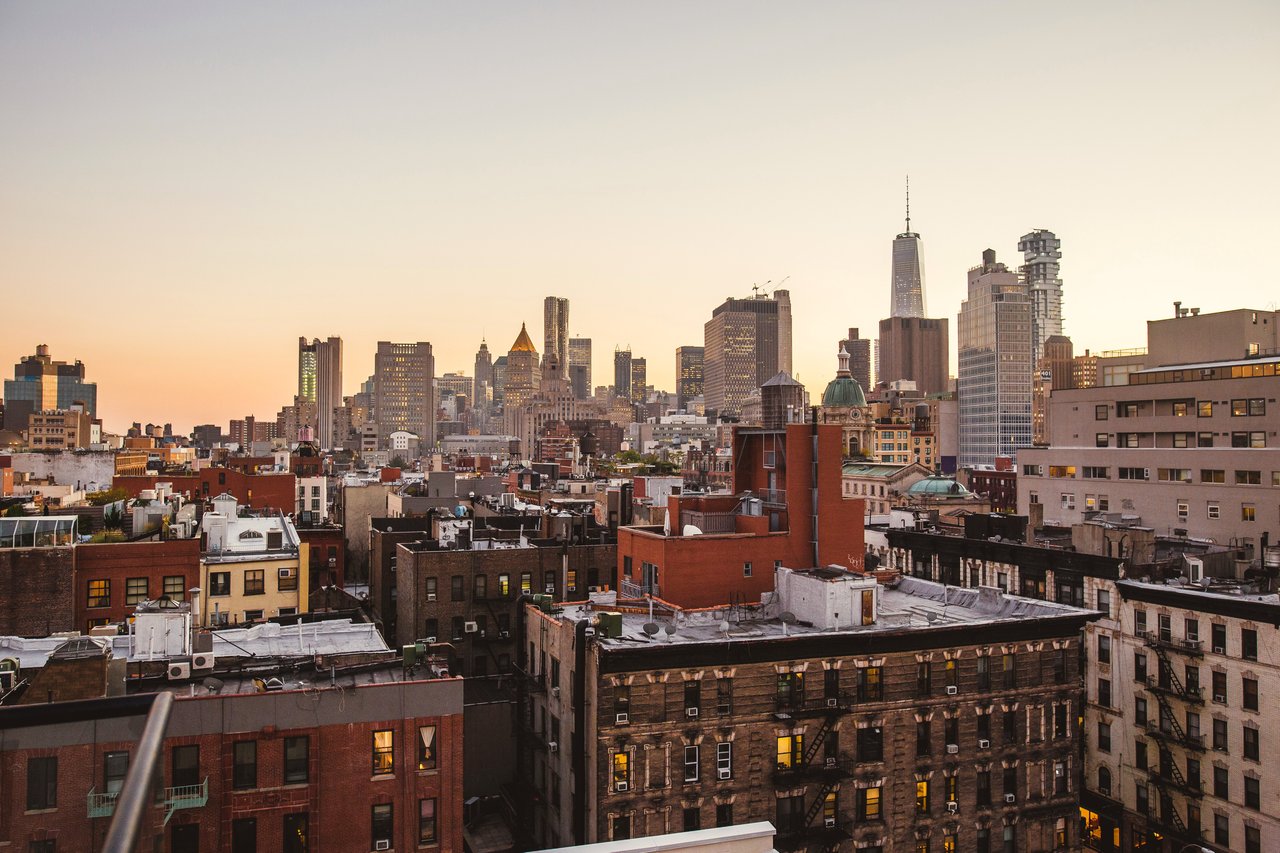
Williams's billboard sits at 18th and 10th, in the part of West Chelsea that has changed the most physically over the past decade, and the piece is explicitly staged against the district's own new towers. That is a public artwork commenting on the neighborhood's own skyline shift, installed on the park that runs directly through it.
Patil's bronze arrives at 24th Street, inside the same stretch that already pulls Thursday evening foot traffic from the galleries clustered between 20th and 29th. Patil's practice is tied to his family's history in Mumbai. His grandfather was a folk poet, his father an avant-garde playwright who wrote about the city's mill and sanitation workers, and Patil built this sculpture as a bridge between labor conditions in Mumbai and in New York, a mass of limbs that reads as solidarity from one angle and a fight for survival from another.
Barrington's billboard is the last of the four to arrive, landing near 14th Street in November, closest to the Whitney and the park's southern end. He built it from the same colored plastic strips used in supermarket coolers and butcher shops, strung across a steel frame so that Hudson River sunset light passes through it the way light passes through stained glass. Barrington has said of the piece, "We are best served as an immigrant nation, in dialogue with each other." Positioned to catch the river view once painted by the Hudson River School, it is a deliberate rewrite of that same vista using the materials of a corner bodega instead of a canvas.
Why the Order Actually Matters to Someone Who Lives Here
If your usual route is the same two or three blocks, in the same direction, at the same time of day, this season is built to be missed in pieces. Someone who only ever enters at 14th Street and turns around at Chelsea Market won't see Patil's bronze until October, and won't see Barrington's billboard at all until November, even though it's installed closest to where they started. Someone who enters at 23rd or 26th for a gallery night gets Patil in October but has to walk another six blocks north to catch what's happening at 30th.
A few practical notes for anyone deciding when to actually go look:
- Williams's billboard at 18th Street and Simnett's stands near 30th Street both open this month, and a walk along the park can take you to both.
- Patil's bronze doesn't arrive until early October, so a September walk through 24th Street will still show last season's work in that spot.
- Barrington's billboard is the last piece to land, in November, which means the park's southern entrance, the one most people use first, gets its new work last.
- Nguyen's Buddha isn't part of the fall rollout at all. It's been up since spring and stays through fall 2027, so it's worth treating as a fixed point you compare the new work against, not something you're catching before it leaves.
The Plinth sculpture has also had a running program attached to it, with the Rubin Museum of Himalayan Art, Columbia University, and Monuments Lab hosting lectures and guided meditation sessions on themes of memory and impermanence, scheduled to run from May through October. If any of that has been on your list, October is close.
"It's intrinsic to powerful public artworks that they become relevant or newly relevant depending on circumstances," Alemani said of the Nguyen piece, as reported by The Art Newspaper. The piece has kept picking up new resonance since it went up in April.
The Corner That's Actually Worth Watching
None of this is scattered programming that happens to overlap. Four artists working in bronze, billboard vinyl, video, and sandstone are all answering some version of the same question this fall, and the physical layout of the park means two of the sharpest answers, Nguyen's monument to a destroyed body and Simnett's tribute to an invisible one, are standing within sight of each other at 30th and 10th. That's the corner to walk past slowly this month, before the rest of the season fills in around it.
Frances Katzen and her team spend as much time reading Chelsea's blocks as its buildings, because the two rarely tell separate stories. If you're weighing a move in the neighborhood, or just want a straight read on how it's changing, Frances Katzen is a good person to talk to.